
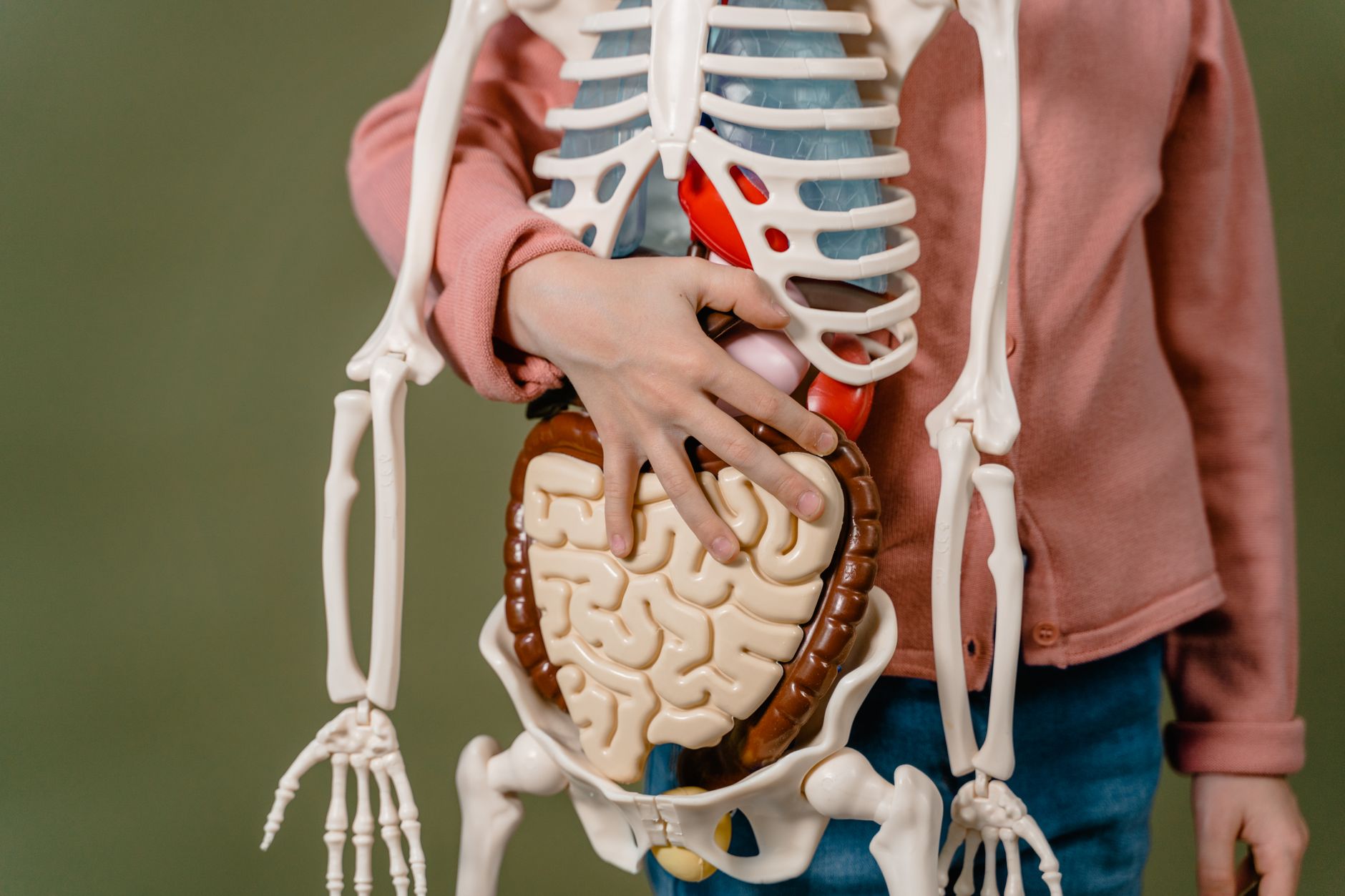
Have you ever felt “butterflies” in your stomach before a big presentation? Or noticed that your digestion goes completely haywire during a high-stress week at work?
For decades, we’ve treated mental health as a phenomenon that happens exclusively from the neck up. If you struggled with brain fog, chronic anxiety, or low mood, the conventional approach was to focus solely on changing your thoughts or altering your brain chemistry.
But medical science is undergoing a massive paradigm shift. We now know that your brain isn’t the only organ running the show. There is a continuous, rapid-fire, bi-directional conversation happening every second between your brain and your gastrointestinal tract.
It’s called the Gut-Brain Axis, and understanding it is the key to unlocking a entirely new level of mental well-being.
What is the Gut-Brain Axis?
The gut-brain axis is a complex, two-way communication network that links your central nervous system (your brain and spinal cord) with your enteric nervous system (the web of nerves lining your gut).
Think of it as a superhighway. Information doesn’t just travel down from your brain to your stomach; in fact, a staggering 90% of the signals traveling along the vagus nerve—the primary highway of this system—are actually moving up from your gut to your brain. Your gut is quite literally telling your brain how to feel.
This system is so powerful and autonomous that scientists widely refer to the gut as our “Second Brain.”
🧠 The Brain 🧠
│ ▲
▼ │ (90% of traffic moves UP the Vagus Nerve!)
🦠 The Gut / Microbiome🦠
The Three Pillars of the Communication Network
To understand how your gut influences your mood, we have to look at the three main pillars of this highway:
1. The Neurotransmitter Factory
You might be surprised to learn that your gut manufactures the vast majority of your body’s “feel-good” chemicals. Approximately 90% of your body’s serotonin (the neurotransmitter responsible for mood stability and happiness) and a significant portion of your GABA (which induces calm and reduces anxiety) are produced in your gut by your microbes. When your gut ecosystem is out of balance, your brain’s supply chain of these vital neurotransmitters gets disrupted.
2. The Microbes in the Driver’s Seat
Inside your digestive tract lives the microbiome—a bustling ecosystem of trillions of bacteria, fungi, and viruses. Far from being passive passengers, these microbes actively digest your food and secrete metabolites called Short-Chain Fatty Acids (SCFAs). These SCFAs travel through your bloodstream, cross the blood-brain barrier, and act as powerful agents that protect your brain cells and reduce neuroinflammation.
3. The Inflammatory Connection
Chronic, low-grade inflammation is now recognized by psychiatric research as a primary driver of depression and anxiety. When poor diet, stress, or toxins damage the lining of your gut, it triggers an immune response. This systemic inflammation can travel straight to the brain, causing symptoms that look exactly like clinical anxiety, fatigue, and brain fog.
Beyond the Hype: What the Science Shows
This isn’t just wellness culture trendiness—it is anchored in rigorous, peer-reviewed clinical data.
In a landmark clinical trial known as the SMILES Trial, researchers wanted to see if dietary changes could treat major depression. They took individuals with moderate-to-severe depression and split them into two groups: one received standard social support, and the other changed to a modified Mediterranean diet rich in gut-supportive fibers, healthy fats, and lean proteins.
The results were astonishing. After just 12 weeks, 32% of the dietary group achieved full remission from their depression, compared to just 8% of the support group. By healing their gut environments, they radically altered their brain function.
The Missing Piece in Mental Health Care
If you’ve been doing therapy, practicing mindfulness, or managing medication, but you still feel stuck in a cycle of low energy, mood swings, and anxiety, your gut might be the missing piece of the puzzle.
True, holistic mental health care means treating the whole human system. We cannot separate what we think from what we eat, how we digest, and how we fuel our biology.
Coming Soon: A Radical New Way to Heal
Because the science is so clear, we believe it’s time to stop treating the mind and body as separate entities.
We are incredibly excited to share that behind the scenes, our mental health centre is developing a brand-new, evidence-based program designed to bridge this exact gap. We are bringing together the worlds of advanced psychotherapy and clinical nutritional psychiatry to offer a comprehensive, dual-track approach to mental wellness.
This program won’t be about restrictive “fad diets” or unproven wellness trends. It will be a highly personalized, scientifically grounded framework led by our licensed therapists and expert clinical nutritionists working hand-in-hand to help you cultivate a resilient mind by building a resilient gut.
We aren’t quite ready to open the doors just yet, but we are finalizing the details to ensure it gives you the exact tools, biochemical testing insights, and behavioral support you need.
Want to be the first to know when we launch?
The conversation between your gut and your brain is already happening—it’s time to make sure it’s a healthy one.
Leave a Reply